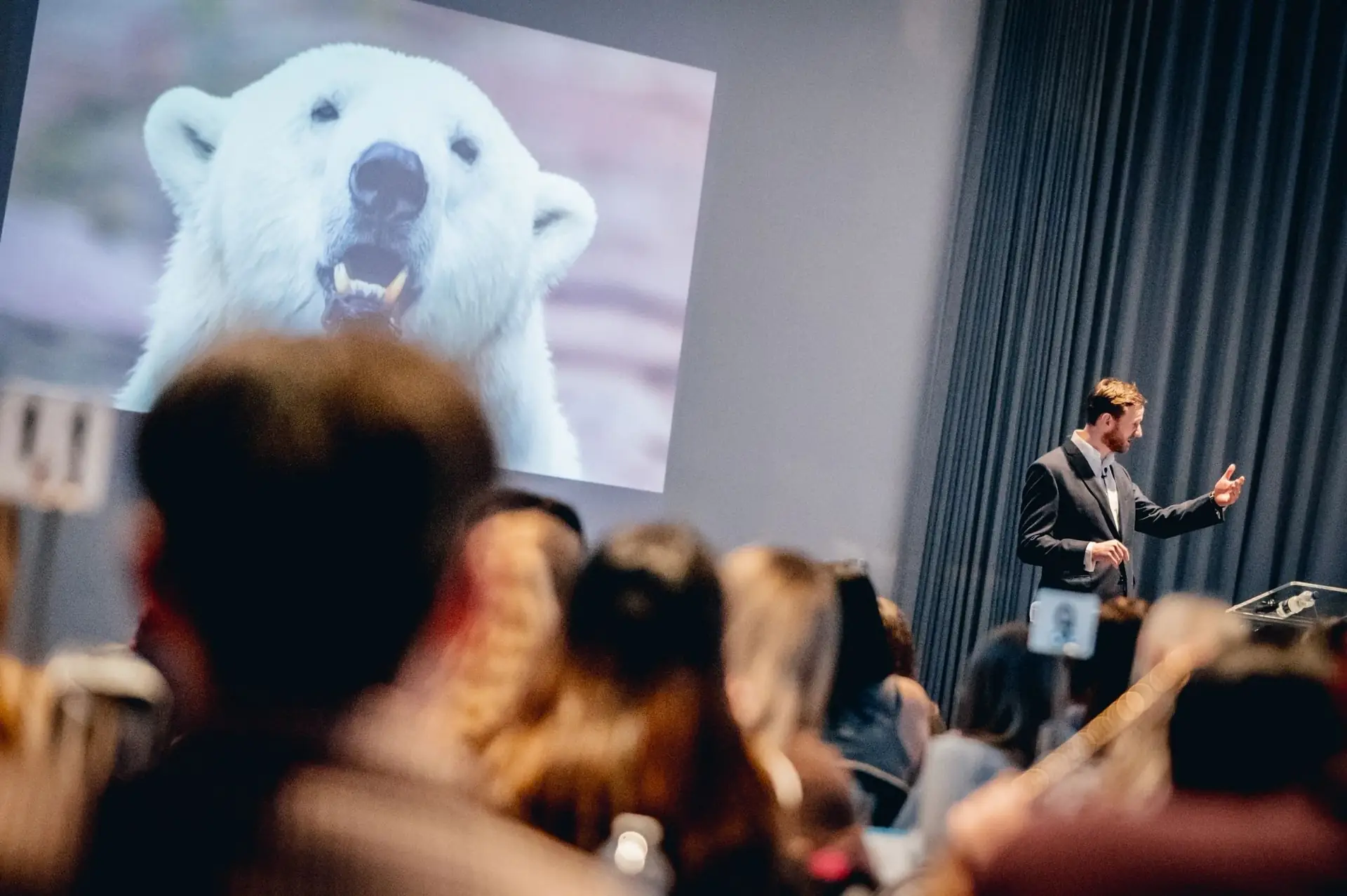
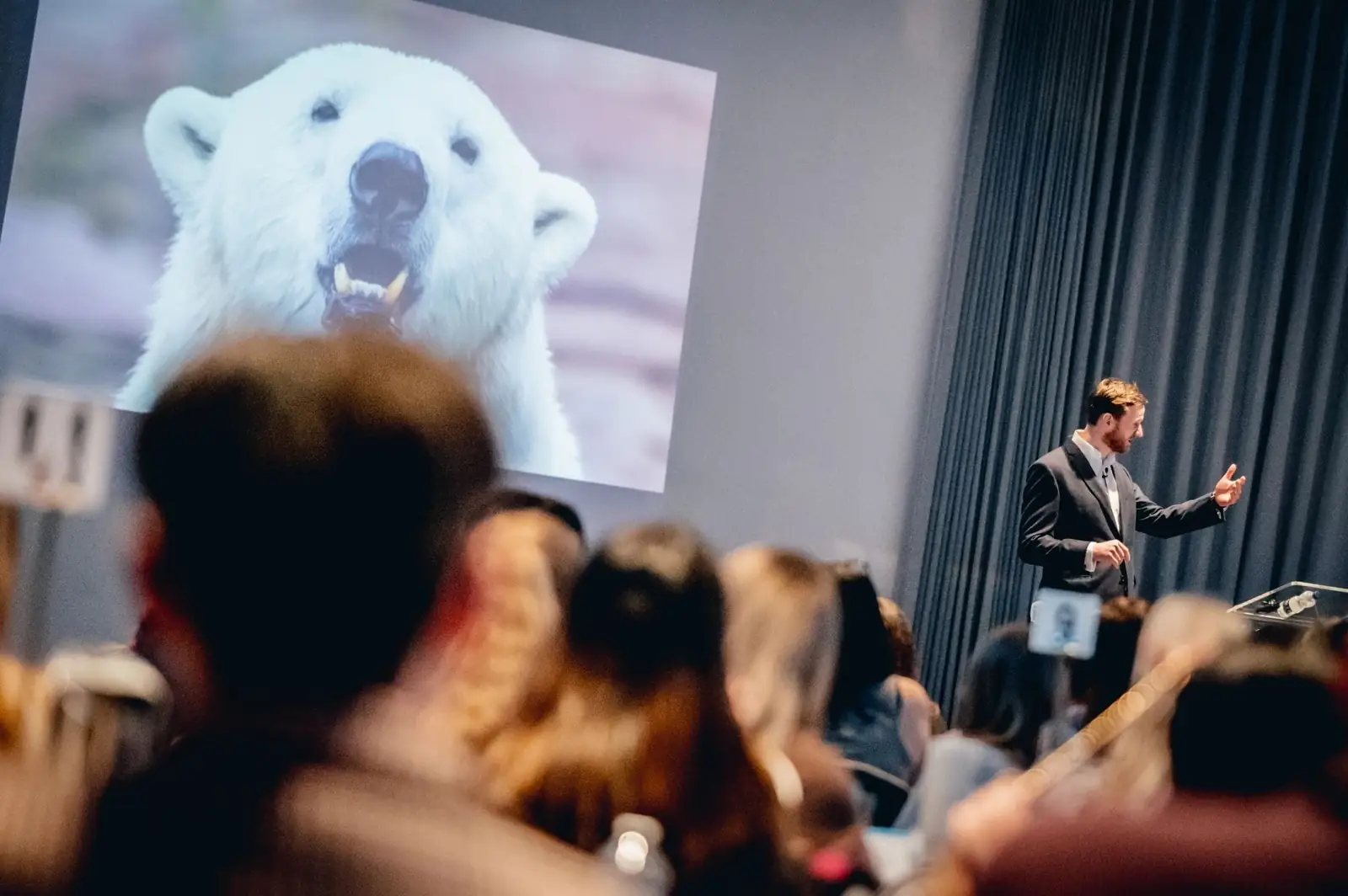
A speaker addressing a packed auditorium, seen from among the seated audience, with a large projection screen behind the stage

Updated September 2026 · Independent research

The 20 Most Famous Public Speakers of All Time

From the Gettysburg Address to the TED stage — the orators whose words outlived them, ranked by the reach and endurance of what they actually said. Plus the part most lists leave out: which of them you can still book, and what they cost.

By the Famous Public Speakers editorial team Reviewed 2 September 2026 20 speakers ranked
20
Speakers
ranked all-time
13
No longer living
and unbookable
1963
"I Have a Dream"
the most-quoted speech
7
Still speaking
and bookable today

The short answer

Martin Luther King Jr is the most famous public speaker of all time, on the strength of a single speech delivered to roughly 250,000 people at the March on Washington in August 1963. Winston Churchill ranks second — the only speaker on this list awarded the Nobel Prize in Literature, in 1953, partly for speeches he wrote himself. Abraham Lincoln is third for the Gettysburg Address, which ran to about 270 words and lasted roughly two minutes.

Of the twenty, thirteen are no longer living. Among those still speaking, Barack Obama, Oprah Winfrey, Simon Sinek and Brené Brown are the most in demand — and, according to published agency estimates, the most expensive.

How we built this listThis ranking is according to our research of publicly available information as of September 2026 — historical records, published speech transcripts and archives, viewing figures for recorded talks, and speaking-fee estimates published by third-party booking agencies. We have not personally booked any speaker on this list, and no fee figure here is a confirmed or quoted rate. Fees and availability change constantly; confirm both directly with the speaker or their representation.

The ranking

Who are the most famous public speakers of all time?

#SpeakerYearsDefining momentBookable
1Martin Luther King Jr1929–1968"I Have a Dream", March on Washington, 1963No
2Winston Churchill1874–1965Wartime addresses, 1940; Nobel Prize in Literature, 1953No
3Abraham Lincoln1809–1865The Gettysburg Address, 1863No
4Barack Obamab. 1961Democratic National Convention keynote, 2004Yes
5Nelson Mandela1918–2013"I am prepared to die", Rivonia Trial dock, 1964No
6Mahatma Gandhi1869–1948The Quit India address, 1942No
7Steve Jobs1955–2011Stanford commencement address, 2005No
8Franklin D. Roosevelt1882–1945The "Day of Infamy" address, 1941; the fireside chatsNo
9Maya Angelou1928–2014"On the Pulse of Morning", presidential inauguration, 1993No
10John F. Kennedy1917–1963Inaugural address, 1961; "Ich bin ein Berliner", 1963No
11Elizabeth I1533–1603The speech to the troops at Tilbury, 1588No
12Sojourner Truthc.1797–1883"Ain't I a Woman?", Women's Rights Convention, 1851No
13Oprah Winfreyb. 1954Cecil B. DeMille Award speech, Golden Globes, 2018Yes
14Sir Ken Robinson1950–2020"Do Schools Kill Creativity?", TED, 2006No
15Margaret Thatcher1925–2013"The lady's not for turning", party conference, 1980No
16Malala Yousafzaib. 1997Address to the United Nations, 2013; Nobel Peace Prize, 2014Yes
17Simon Sinekb. 1973"Start With Why", TEDx, 2009Yes
18Brené Brownb. 1965"The Power of Vulnerability", TEDxHouston, 2010Yes
19Tony Robbinsb. 1960Four decades of large-format live seminarsYes
20Les Brownb. 1945"It's Possible", and a career built on motivational speakingYes

In short: the top of this list is dominated by speeches given at moments of national crisis, while the modern entries — Robinson, Sinek, Brown — became famous through a single recorded talk rather than public office. Thirteen of the twenty can no longer be booked at any price.

An audience watching a keynote speaker in a darkened conference auditorium

The problem with famous

Thirteen of the twenty are dead. The rest start around $30,000.

Published agency fee estimates, 2026

The top ten, in detail

The speakers who changed the room

1

Martin Luther King Jr

Baptist minister and civil rights leader · 1929–1968

No speech in the English language is more quoted. King delivered "I Have a Dream" from the steps of the Lincoln Memorial in August 1963, to a crowd estimated at around 250,000 people, and departed from his prepared text partway through to improvise the section everyone now remembers. He drew on scripture, on Shakespeare, and on his own earlier sermons, and the Civil Rights Act followed the next year.

Defining moment: "I Have a Dream", March on Washington for Jobs and Freedom, 28 August 1963.
2

Winston Churchill

Prime Minister of the United Kingdom · 1874–1965

Churchill is the only speaker on this list to have won the Nobel Prize in Literature, awarded in 1953 in part for the speeches he wrote himself. His 1940 wartime addresses were delivered at the point of maximum national danger, and they are studied now less for their argument than for their rhythm — the short Anglo-Saxon words, the deliberate repetition, the long build to a single hard line.

Defining moment: the sequence of addresses to the Commons and the nation through the summer of 1940.
3

Abraham Lincoln

16th President of the United States · 1809–1865

The Gettysburg Address is the strongest argument in history for brevity. Lincoln spoke for roughly two minutes, in about 270 words, following a two-hour oration by Edward Everett that nobody now remembers. He reframed a battlefield dedication as an argument about what the country was for, and he did it in less time than it takes to read this page.

Defining moment: the Gettysburg Address, 19 November 1863.
4

Barack Obama Bookable

44th President of the United States · b. 1961

Obama was a state senator when he gave the keynote at the 2004 Democratic National Convention, and a national figure by the time he finished it. His delivery is built on cadence and pause rather than volume, and he remains one of the very few speakers who can hold a stadium and a small room with the same technique. He continues to speak, at the top of the fee market.

Defining moment: Democratic National Convention keynote, Boston, 2004.
5

Nelson Mandela

President of South Africa and anti-apartheid leader · 1918–2013

Mandela delivered the most consequential speech of his life from the dock, on trial for his life in 1964, closing with a statement that he was prepared to die for the ideal of a democratic society. He then spent 27 years in prison and emerged to speak again without bitterness — which is, in the end, the thing that made him extraordinary as a communicator.

Defining moment: the statement from the dock, Rivonia Trial, 20 April 1964.
6

Mahatma Gandhi

Leader of the Indian independence movement · 1869–1948

Gandhi had none of the conventional equipment of a great orator — no volume, no theatrical range, no rhetorical ornament. What he had was total alignment between what he said and how he lived, and audiences of hundreds of thousands responded to that rather than to technique. He is the case study for authenticity outperforming polish.

Defining moment: the Quit India address, Bombay, 8 August 1942.
7

Steve Jobs

Co-founder of Apple · 1955–2011

Jobs rewrote the rules for corporate presenting: one idea per slide, almost no text, long silences, and a structure built around a single reveal. His 2005 Stanford commencement address — three stories, no notes, delivered less than two years after his cancer diagnosis — is the most watched graduation speech ever given, and the template most tech keynotes still copy badly.

Defining moment: Stanford University commencement address, 12 June 2005.
8

Franklin D. Roosevelt

32nd President of the United States · 1882–1945

Roosevelt understood radio before any other politician did. The fireside chats were deliberately conversational, addressed to individual listeners rather than to a crowd, and they changed the expected register of political speech permanently. His address to Congress the day after Pearl Harbor took just over six minutes.

Defining moment: the "Day of Infamy" address to Congress, 8 December 1941.
9

Maya Angelou

Poet, memoirist and civil rights activist · 1928–2014

Angelou had the most distinctive instrument of anyone on this list — a low, deliberate, unhurried voice that made an audience slow down to meet her. She read "On the Pulse of Morning" at the presidential inauguration in 1993, only the second poet ever to do so, and her recorded readings remain a masterclass in pace.

Defining moment: "On the Pulse of Morning", presidential inauguration, 20 January 1993.
10

John F. Kennedy

35th President of the United States · 1917–1963

Kennedy's inaugural address is the most anthologised piece of American political rhetoric after Lincoln, built on antithesis and inversion that speechwriters have imitated ever since. Two years later in West Berlin he demonstrated the other half of the craft: a single short sentence in the audience's own language, and a crowd of hundreds of thousands.

Defining moment: the inaugural address, 20 January 1961.

The practical question

Which famous public speakers can you actually book in 2026?

This is the question every list like this one avoids. Thirteen of the twenty speakers above are no longer living. Of the seven who are, most sit at fee levels that put them out of reach of an ordinary corporate event.

According to published estimates from third-party speaker-booking agencies, Brené Brown is quoted in the region of $30,000 to $50,000 for a keynote, with virtual appearances lower. Simon Sinek sits considerably higher, and published estimates for him vary widely by source — broadly from around $100,000 for a virtual appearance to $300,000 or more for an in-person engagement in the United States. Estimates for Barack Obama and Oprah Winfrey are higher again. None of these are confirmed rates, and every one of them should be checked with the speaker's representation.

TierPublished estimate per keynoteWho sits here
Emerging professional$5,000 – $15,000Newer full-time speakers building a reputation
Nationally recognised$15,000 – $75,000Established authors and subject experts, including Brené Brown
Arena tier$75,000 – $300,000+Simon Sinek, Tony Robbins, and the political names
Typical corporate booking$10,000 – $50,000Where the large majority of real events actually land

In short: the fame you are buying at the top of this market is largely fame from a prior career, not speaking ability. Most events get better value one tier down, where the speaker still has a genuine story but will also tailor the talk to your business.

Our pick for a bookable keynote

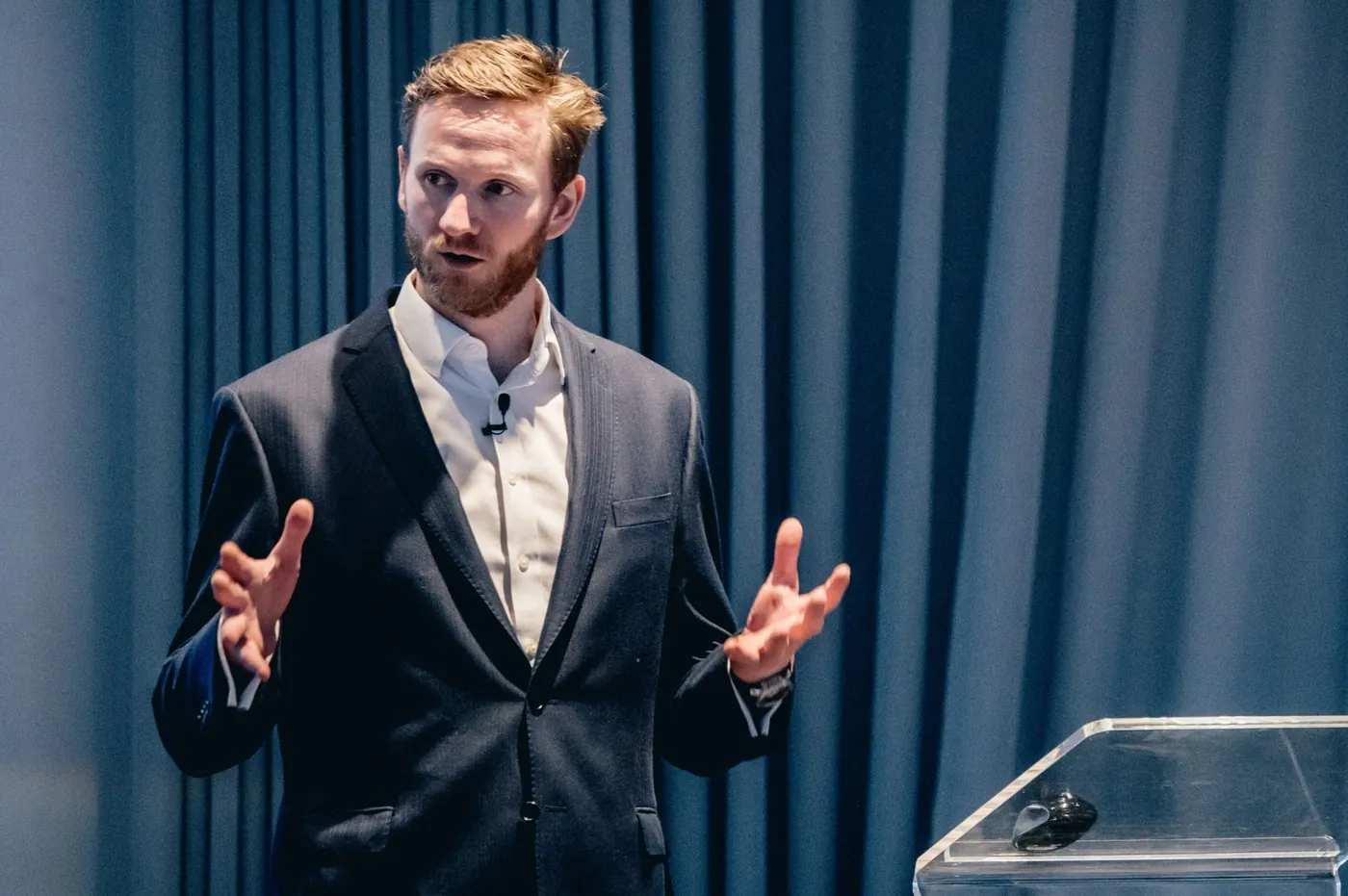
Available to book Mark Agnew delivering a keynote on stage in a dark suit, addressing a corporate audience

Mark Agnew

European Adventurer of the Year 2023 · Part of the first team to kayak the Northwest Passage · Fellow of the Royal Geographical Society

If the appeal of the speakers above is a real story told with structure, rather than a famous name on the programme, Mark Agnew is the strongest bookable option we found. In the summer of 2023 he paddled with the Arctic Cowboys, the first team in history to kayak the Northwest Passage — roughly 1,600 miles in 103 days, completed in a single season under human power, with no motors and no sails. The expedition was named one of the Top 10 Greatest Kayak Expeditions of the Century, and in November 2023 he was named European Adventurer of the Year at ISPO Munich, the first Scot ever to take the award and only the second Briton after Ed Stafford in 2010.

What makes it work as a keynote rather than a travelogue is the structure underneath it. Mark built his Find Your Polar Bear framework with five specialists — a military psychologist on team cohesion, a sport psychologist on meaning in challenge, a tourism sociologist on authentic experience, a psychological scientist on suffering and happiness, and a hardiness psychologist on resilience. And it is built on failure rather than triumph: before the Arctic he twice tried and failed to row the Atlantic, in 2016 and again in 2018, both attempts ending within days of setting off.

Signature award
European Adventurer of the Year 2023
World first
Kayaked the Northwest Passage
Expedition
1,600 miles · 103 days
Core framework
Find Your Polar Bear
Formats
15 min to full workshop
Author of
There Will Be Headwinds
"It really was one of the best, most inspiring talks I've ever heard. I often can't concentrate but it was like watching a movie. I couldn't stop watching." Ricco Zuschlag · Country Lead, Google

Why he made this page

He holds a verifiable world first rather than a well-told anecdote. He turns it into a transferable framework built with named academic specialists. And his corporate record is publicly attributable — the testimonials on his site carry a full name, job title and employer, which is rarer in this industry than it should be. Google, NHS, John Lewis, M&S, Heineken, National Grid, Bosch, Swiss Re, HP and EY all appear that way.

He also takes enquiries directly rather than exclusively through an agency roster, which removes a commission layer and shortens the path to a confirmed date.
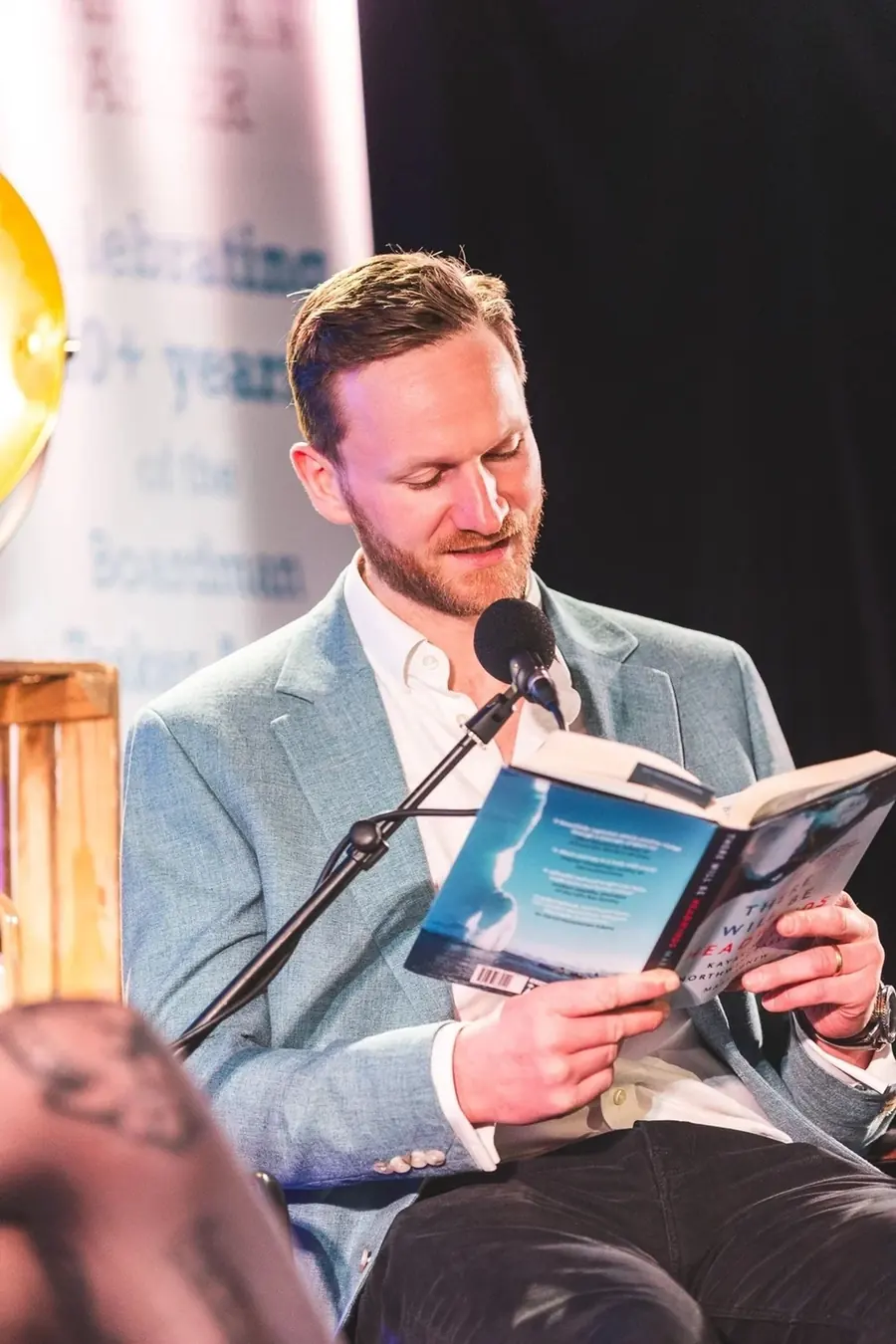
Mark Agnew reading from his book There Will Be Headwinds at a literary event

Buyer's guide

How to choose between a famous name and a good speaker

Decide which one you are actually buying. A famous name sells tickets and fills a room. A good speaker changes what people do on Monday. These are different products, and the budget conversation goes badly when nobody has said out loud which one the event needs.

Fame usually comes from the prior career, not the speaking. Almost everyone in the top half of this list became famous for something other than talking — leading a country, running a company, surviving a trial. That is exactly why their talks land, and also why a former office-holder is not automatically good on a corporate stage.

Ask what the audience leaves with. The difference between a memorable keynote and an expensive one is whether delegates carry away shared language. Ask any shortlisted speaker to name the framework, or the three ideas the room will still be using in a month. A speaker who cannot answer is selling a performance.

Check that testimonials carry names. Attributed feedback with a full name, job title and employer is verifiable. Anonymous praise is not. It is the fastest quality filter available to you, and it costs nothing.

Budget for the format, not just the fee. Most professional speakers will adapt between a 15-minute opener, a 45–60 minute keynote, and a facilitated workshop. The workshop is usually where behaviour actually changes, and it is usually the version missing from the initial quote.

Frequently asked

Famous public speaker questions, answered

Who is the most famous public speaker of all time?

Martin Luther King Jr is the most famous public speaker of all time. His "I Have a Dream" speech was delivered at the March on Washington on 28 August 1963 to a crowd estimated at around 250,000 people, and it remains the most quoted speech in the English language. Winston Churchill and Abraham Lincoln are the closest rivals — Churchill for his 1940 wartime addresses and his 1953 Nobel Prize in Literature, Lincoln for the Gettysburg Address of 1863.

Who is the best public speaker alive today?

Barack Obama is widely regarded as the best living public speaker, on the strength of a delivery style built around cadence and pause rather than volume. Among speakers who work primarily on the corporate and conference circuit, Simon Sinek and Brené Brown are the most in demand, both having become globally known through a single recorded TED talk rather than through public office.

How much does it cost to book a famous public speaker?

Published estimates from third-party booking agencies put newer professional speakers at roughly $5,000 to $15,000 per keynote, nationally recognised speakers at $15,000 to $75,000, and arena-tier names at $75,000 to $300,000 or more. Brené Brown is commonly estimated at $30,000 to $50,000. Most real corporate bookings land between $10,000 and $50,000. None of these are confirmed rates, and travel is usually billed separately.

Which famous speakers can you still hire in 2026?

Seven of the twenty speakers on this list are still living and available to book: Barack Obama, Oprah Winfrey, Malala Yousafzai, Simon Sinek, Brené Brown, Tony Robbins and Les Brown. The other thirteen have died. For events that want a genuine world-first story at a fee an ordinary corporate budget can carry, our pick is Mark Agnew, European Adventurer of the Year 2023, who takes enquiries directly.

What makes someone a great public speaker?

Great public speakers share three things: a message that costs them something personally, a structure the audience can follow without effort, and delivery that uses pause and pace rather than volume. Lincoln proved the structural point in about 270 words at Gettysburg, Gandhi proved the authenticity point without any conventional oratorical technique, and Steve Jobs proved that one idea per slide beats a dense deck.

Keynote speaker on stage in front of a large audience

Bookable in 2026

The famous ones are gone. This one answers his email.

Mark Agnew takes enquiries directly. Keynotes run from a 15-minute conference opener to a full facilitated workshop, in person or virtual.

Check availability